USA authorized Horse Boost retailerAuthorized retailerOne gummy daily - 30 gummies per bottleMoney-back guaranteeMoney-back guaranteeLot HOR-26/GO-5652

Official product information

Horse Boost Ingredients: What Each Gummy Contains

Written and reviewed by the Horse Boost Editorial Desk · Last updated

Quick answer

Each Horse Boost gummy holds one 82 mg blend of nine ingredients.

Caffeine is listed at 5 mg; the other eight, including maca, ashwagandha and L-arginine, share the rest. The gelling agent is apple pectin.

Want the full panel? Read the Supplement Facts.

The Horse Boost ingredient list, from the label

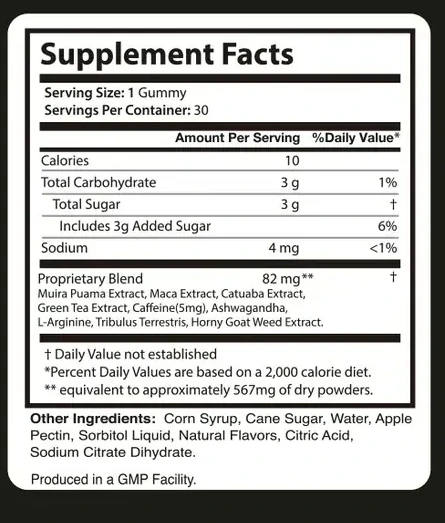
The Supplement Facts panel lists nine ingredients, and it prints one number for all of them: a proprietary blend of 82 mg. One amount inside that blend is disclosed — caffeine, 5 mg. The rest is not broken down.

That single line is the whole active side of the product, so this page is mostly an exercise in working out what a number that size can hold.

Horse Boost Supplement Facts panel on the back of the bottle
The back label: 1 gummy per serving, 30 servings, and one blend line covering nine names.
Straight from the panel, in label order. A dash means the amount is not published.
OrderIngredientAs printedAmount
1Muira puama extractPtychopetalum olacoides—
2Maca extractLepidium meyenii—
3Catuaba extractErythroxylum catuaba / Trichilia catigua—
4Green tea extractCamellia sinensis—
5Caffeinethe one amount printed inside the blend5 mg
6AshwagandhaWithania somnifera—
7L-argininean amino acid—
8Tribulus terrestrisnot in the seller’s ingredient graphics—
9Horny goat weed extractEpimedium; not in the seller’s ingredient graphics—
Proprietary Blend — 82 mgNine ingredients share one number. Eight of the nine amounts are not published anywhere.
0 mgThe split between the nine is not disclosed82 mg
82 mgthe whole blend, per gummy
5 mgcaffeine — the only amount inside it
8 of 9amounts the label does not print

Each Horse Boost ingredient, one by one

What it is, what research says, and what an undisclosed share of 82 mg can realistically be.

Herb · bark and root · amount not published

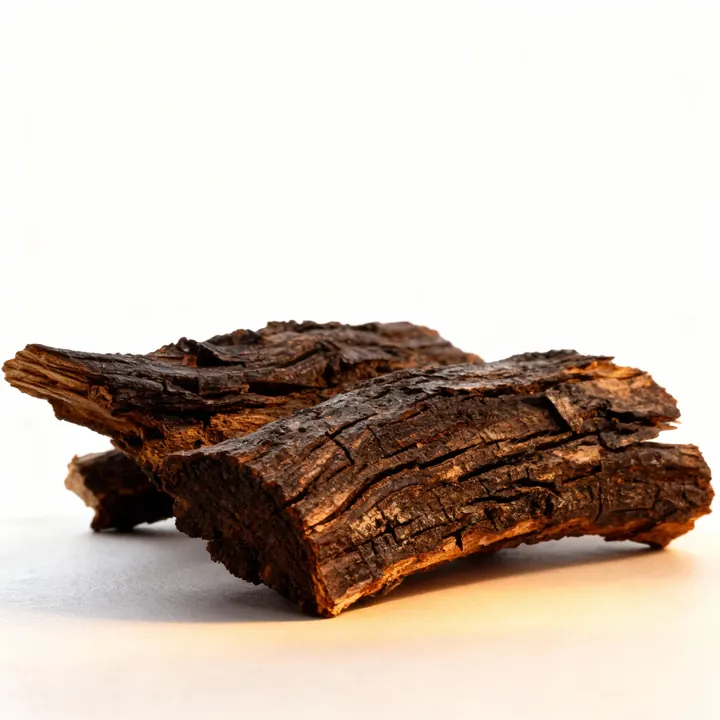
Muira puama extract

Ptychopetalum olacoides

Muira puama extract, one of the seller’s ingredient photographs

The seller publishes a photograph for this ingredient.

  • Ptychopetalum olacoides, a small Amazonian tree sold for decades as “potency wood”.
  • Human research is very thin: a handful of small, old, open-label reports, none of them controlled.
  • No established dose exists, which means there is no benchmark to compare this blend against.
  • It is listed first, so by weight it is the largest share of the 82 mg — but the label does not say how large.
  • Memorial Sloan Kettering’s summary is that evidence for its traditional uses is insufficient.

Watch for: Little human safety data at any dose. Nothing specific to watch for at an undisclosed share of 82 mg. Source: Memorial Sloan Kettering Cancer Center, “Muira Puama (About Herbs)”.

Herb · root · amount not published

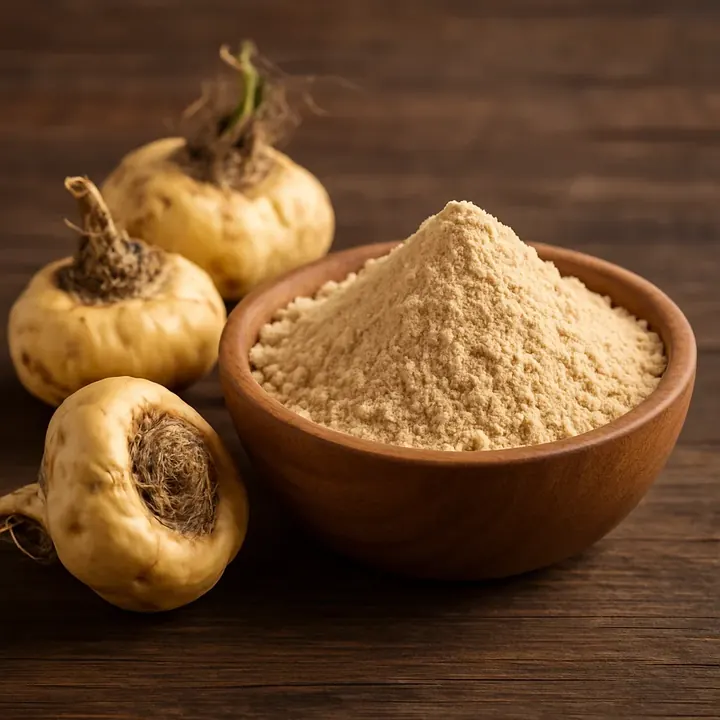
Maca extract

Lepidium meyenii

Maca extract, one of the seller’s ingredient photographs

The seller publishes a photograph for this ingredient.

  • Lepidium meyenii, a Peruvian root vegetable eaten as a food and sold as a libido supplement.
  • Trials generally use 1,500 to 3,000 mg a day, and in Peru it is eaten in gram quantities.
  • This blend is 82 mg in total, so maca’s share is a small fraction of a fraction.
  • NCCIH’s summary is that there is not enough evidence to know whether maca helps any health condition.
  • Maca is one of the friendlier ingredients in this category: it is a food, and it is well tolerated.

Watch for: Generally well tolerated as a food at far higher amounts. Source: National Center for Complementary and Integrative Health, “Maca”.

Herb · bark · amount not published

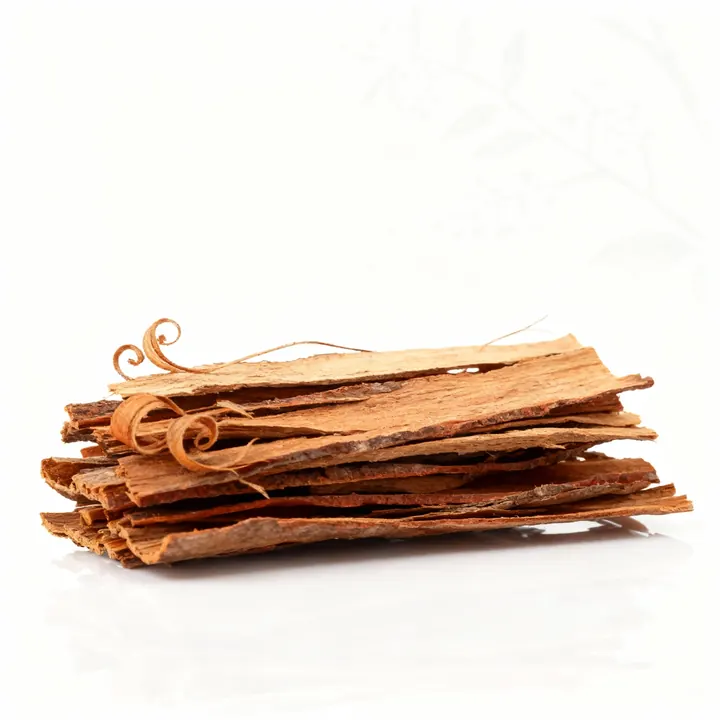
Catuaba extract

Erythroxylum catuaba / Trichilia catigua

Catuaba extract, one of the seller’s ingredient photographs

The seller publishes a photograph for this ingredient.

  • Sold as “catuaba”, but the name covers at least two unrelated plants — Erythroxylum catuaba and Trichilia catigua.
  • That ambiguity is the problem: two bottles labelled catuaba can contain different species with different chemistry.
  • Human research is essentially absent. There is no dose anyone can point to.
  • The label does not say which species is in this blend, and does not print a Latin name at all.
  • It is the third name on the list, so it is a smaller share again of the 82 mg.

Watch for: Almost no human safety data. The species ambiguity is the more practical concern. Source: Memorial Sloan Kettering Cancer Center, “Catuaba (About Herbs)”.

Herb · leaf · amount not published

Green tea extract

Camellia sinensis

  • Camellia sinensis, the most-studied plant on this list by a wide margin.
  • Trials of green tea extract use roughly 250 to 500 mg a day, standardised for catechins.
  • No standardisation is printed here, and no amount either.
  • Green tea extract is also the likeliest source of the caffeine listed two names later.
  • At a fraction of 82 mg, neither the catechins nor the caffeine from it amount to much.

Watch for: Concentrated green tea extracts have been linked to liver injury at high doses, far above anything possible inside an 82 mg blend. Source: National Center for Complementary and Integrative Health, “Green Tea”.

Stimulant · 5 mg

Caffeine

the one amount printed inside the blend

  • The only ingredient inside this blend with its own printed amount: 5 mg.
  • A cup of brewed coffee is usually 80 to 100 mg, so this is roughly a twentieth of a cup.
  • Printing it is genuinely good practice, and it should be credited.
  • It also proves the point of this page: the other eight amounts could have been printed too.
  • It appears in none of the seller’s marketing graphics, which matters if you avoid caffeine.

Watch for: Negligible for most adults. The FDA treats up to 400 mg a day as not generally associated with negative effects in healthy adults. Source: U.S. Food and Drug Administration, “Spilling the Beans: How Much Caffeine is Too Much?”.

Herb · root · amount not published

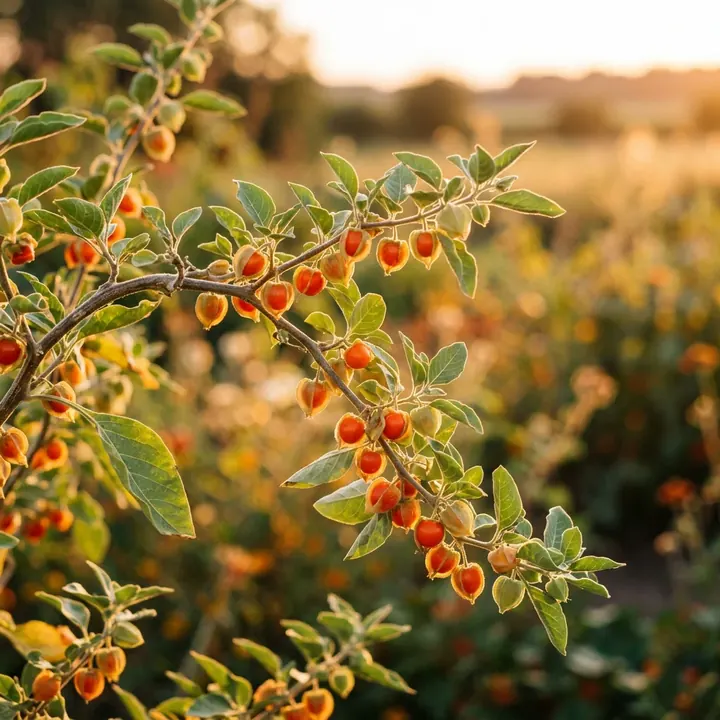
Ashwagandha

Withania somnifera

Ashwagandha, one of the seller’s ingredient photographs

The seller publishes a photograph for this ingredient.

  • Withania somnifera, an adaptogen with the best evidence base of anything on this list after caffeine.
  • Trials on stress, sleep and exercise performance generally use 300 to 600 mg a day of root extract.
  • No amount and no standardisation (for withanolides) is printed here.
  • Even if ashwagandha were the entire 82 mg blend, it would be a quarter of the lowest studied dose.
  • It is the ingredient here most worth buying on its own, properly dosed, if the effect is what you want.

Watch for: Can interact with thyroid, sedative and immunosuppressant medicines at studied doses. Liver injury has been reported rarely. Source: National Center for Complementary and Integrative Health, “Ashwagandha”.

Amino acid · amount not published

L-arginine

an amino acid

L-arginine, one of the seller’s ingredient photographs

The seller publishes a photograph for this ingredient.

  • An amino acid the body converts to nitric oxide, which widens blood vessels.
  • This is the plausible mechanism behind the whole category, and it is dose-dependent.
  • Trials use 3,000 to 6,000 mg a day — three to six grams.
  • The entire blend here is 0.082 grams, shared between nine ingredients.
  • It is the seventh name on the panel, so its share is smaller still.

Watch for: Can lower blood pressure at gram doses, which matters if you take nitrates. Not a concern at this weight. Source: Memorial Sloan Kettering Cancer Center, “Arginine (About Herbs)”.

Herb · fruit · amount not published

Tribulus terrestris

not in the seller’s ingredient graphics

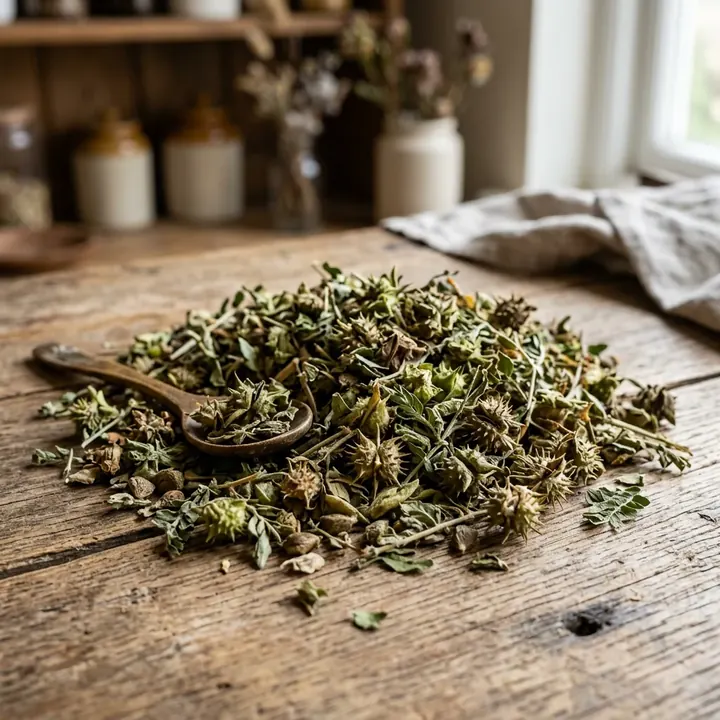
Tribulus terrestris, one of the seller’s ingredient photographs

The seller publishes a photograph for this ingredient.

  • A spiny vine sold for decades as a testosterone booster.
  • Reviews generally find no effect on testosterone in healthy men at any dose.
  • Trials use 250 to 750 mg a day. This is the eighth of nine names in an 82 mg blend.
  • It does not appear in the “Inside Horse Boost” or “How Horse Boost works” graphics.
  • It does have its own ingredient photograph in the seller’s image set, which is a third list again.

Watch for: Stomach upset at supplement doses. MSK notes case reports of liver and kidney problems with high-dose products. Source: Memorial Sloan Kettering Cancer Center, “Tribulus terrestris (About Herbs)”.

Herb · leaf · amount not published

Horny goat weed extract

Epimedium; not in the seller’s ingredient graphics

  • An Epimedium species, used in traditional Chinese medicine, whose best-known compound is icariin.
  • Which species matters: icariin content varies several-fold across the genus, and none is named here.
  • The little research there is uses hundreds of milligrams a day.
  • It is the last of nine names, so it is the smallest share of the 82 mg.
  • Like caffeine and tribulus, it is missing from the seller’s ingredient graphics.

Watch for: MSK lists dizziness, dry mouth and rapid heartbeat at real doses and advises avoiding it with heart disease. Source: Memorial Sloan Kettering Cancer Center, “Epimedium / Horny Goat Weed (About Herbs)”.

What 82 milligrams looks like

The nine names above are what the marketing is built around, and they share one number between them. Here is that number against the amounts research actually uses.

The whole proprietary blend, per gummy82 mg
Against roughly 6,000 mg, what these nine ingredients weigh at the doses research uses~6,000 mg

L-arginine alone is studied at 3,000–6,000 mg a day. Maca at 1,500–3,000 mg. Ashwagandha at 300–600 mg. The entire blend here is 82 mg — about a seventieth of that combined total, shared between nine names.

  • Muira puama extractNo established dose; human research is very thinnot publishedAt most 77 mg, and only if it were the whole blend
  • Maca extract1,500–3,000 mg a day in most trialsnot publishedAt most 77 mg, and only if it were the whole blend
  • Catuaba extractNo established dose; almost no human researchnot publishedAt most 77 mg, and only if it were the whole blend
  • Green tea extract250–500 mg a day of extract in most trialsnot publishedAt most 77 mg, and only if it were the whole blend
  • Caffeine100–200 mg is a usual effective dose5 mgAbout 1/20 of a usual 100 mg dose
  • Ashwagandha300–600 mg a day of root extract in most trialsnot publishedAt most 77 mg, and only if it were the whole blend
  • L-arginine3,000–6,000 mg a day in most trialsnot publishedAt most 77 mg, and only if it were the whole blend
  • Tribulus terrestris250–750 mg a day in most trialsnot publishedAt most 77 mg, and only if it were the whole blend
  • Horny goat weed extractHundreds of milligrams in the little research there isnot publishedAt most 77 mg, and only if it were the whole blend

Trial ranges are the ones usually quoted for these ingredients. They are not studies of Horse Boost; no study of this product exists. The ceiling column is arithmetic, not a measurement: 82 mg minus the 5 mg of caffeine leaves 77 mg for eight ingredients to share.

  • Muira puama extractamount not published · Ptychopetalum olacoidesAlmost no human research at any dose
  • Maca extractamount not published · Lepidium meyeniiSome small trials on libido — at 1.5–3 g a day
  • Catuaba extractamount not published · Erythroxylum catuaba / Trichilia catiguaEssentially no human research, and inconsistent plant identity
  • Green tea extractamount not published · Camellia sinensisReal research on metabolism and antioxidants, at 250–500 mg
  • Caffeine5 mg · the one amount printed inside the blendVery well studied — at 100–200 mg, not 5 mg
  • Ashwagandhaamount not published · Withania somniferaThe best-evidenced name here, at 300–600 mg a day
  • L-arginineamount not published · an amino acidStudied for blood flow at 3–6 g a day
  • Tribulus terrestrisamount not published · not in the seller’s ingredient graphicsWeak evidence at any dose
  • Horny goat weed extractamount not published · Epimedium; not in the seller’s ingredient graphicsLimited human evidence, and species matters

Three ingredient lists, none of which match

The seller publishes this product’s ingredients three times. The panel names nine. The “Inside” and “How it works” graphics name six. The set of individual ingredient photographs is a different six again.

On the panel

Nine names

  1. Muira puama extract
  2. Maca extract
  3. Catuaba extract
  4. Green tea extract
  5. Caffeine
  6. Ashwagandha
  7. L-arginine
  8. Tribulus terrestris
  9. Horny goat weed extract

In the seller’s graphics

Six names

  1. Muira puama extract
  2. Maca extract
  3. Catuaba extract
  4. Green tea extract
  5. Caffeine
  6. Ashwagandha
  7. L-arginine
  8. Tribulus terrestris
  9. Horny goat weed extract

With a photograph

Six names

  1. Muira puama extract
  2. Maca extract
  3. Catuaba extract
  4. Green tea extract
  5. Caffeine
  6. Ashwagandha
  7. L-arginine
  8. Tribulus terrestris
  9. Horny goat weed extract

Three names on the panel are missing from the marketing graphics: caffeine, tribulus terrestris and horny goat weed. The photograph set includes tribulus and drops green tea. None of this is unlawful, and a buyer reading the artwork still would not know there is a stimulant in the gummy.

Other ingredients and the gummy base

This label prints its other-ingredients line in full, which is more than many manage: corn syrup, cane sugar, water, apple pectin, sorbitol liquid, natural flavors, citric acid, sodium citrate dihydrate.

That line answers the question people most often ask about a gummy. The gelling agent is apple pectin, which comes from fruit, not gelatin, which comes from animal collagen. So the vegetarian badge on this product is checkable and true — a small thing, and one of the better facts on the label.

It also explains the nutrition block: corn syrup and cane sugar are the first two entries, and they are where the 3 g of added sugar comes from.

One bottle of Horse Boost gummies

Want to read the label in person? Start with one bottle of Horse Boost.

Check today’s price

What “listed in descending order of weight” buys you

A proprietary blend is not completely opaque. Label rules require the ingredients inside it to be listed in descending order by weight, so the order on the panel does carry information.

Here it tells you that muira puama is the largest share and horny goat weed the smallest, with caffeine — the one published amount — sitting fifth at 5 mg. That is a useful anchor: everything listed after caffeine weighs 5 mg or less.

The one genuinely useful inference a blend allows.
PositionIngredientWhat the order tells you
1–4Muira puama, maca, catuaba, green teaEach is at least 5 mg, and together with the rest they total 82 mg
5CaffeineExactly 5 mg — printed
6–9Ashwagandha, L-arginine, tribulus, horny goat weedEach is 5 mg or less

Horse Boost ingredients: questions

More answers on the full FAQ page.

What is in Horse Boost?

One proprietary blend of 82 mg containing nine ingredients: muira puama, maca, catuaba, green tea, caffeine (5 mg), ashwagandha, L-arginine, tribulus terrestris and horny goat weed. Plus 10 calories, 3 g of sugar and 4 mg of sodium.

How much of each ingredient is in it?

Only one is published: caffeine, at 5 mg. The other eight share what is left of the 82 mg blend, and the label does not say how it is divided. That is what a proprietary blend means.

Is 82 mg a lot?

No. 82 mg is about the weight of a large grain of rice. L-arginine alone is studied at 3,000–6,000 mg a day, maca at 1,500–3,000 mg and ashwagandha at 300–600 mg. Even if one ingredient took the whole blend, it would be below all of those.

What are the other ingredients?

Printed in full on the label: corn syrup, cane sugar, water, apple pectin, sorbitol liquid, natural flavors, citric acid, sodium citrate dihydrate.

Is there caffeine in it?

Yes — 5 mg, printed inside the blend. That is roughly a twentieth of a cup of coffee. It does not appear in any of the seller’s marketing graphics, which is worth knowing if you avoid caffeine.

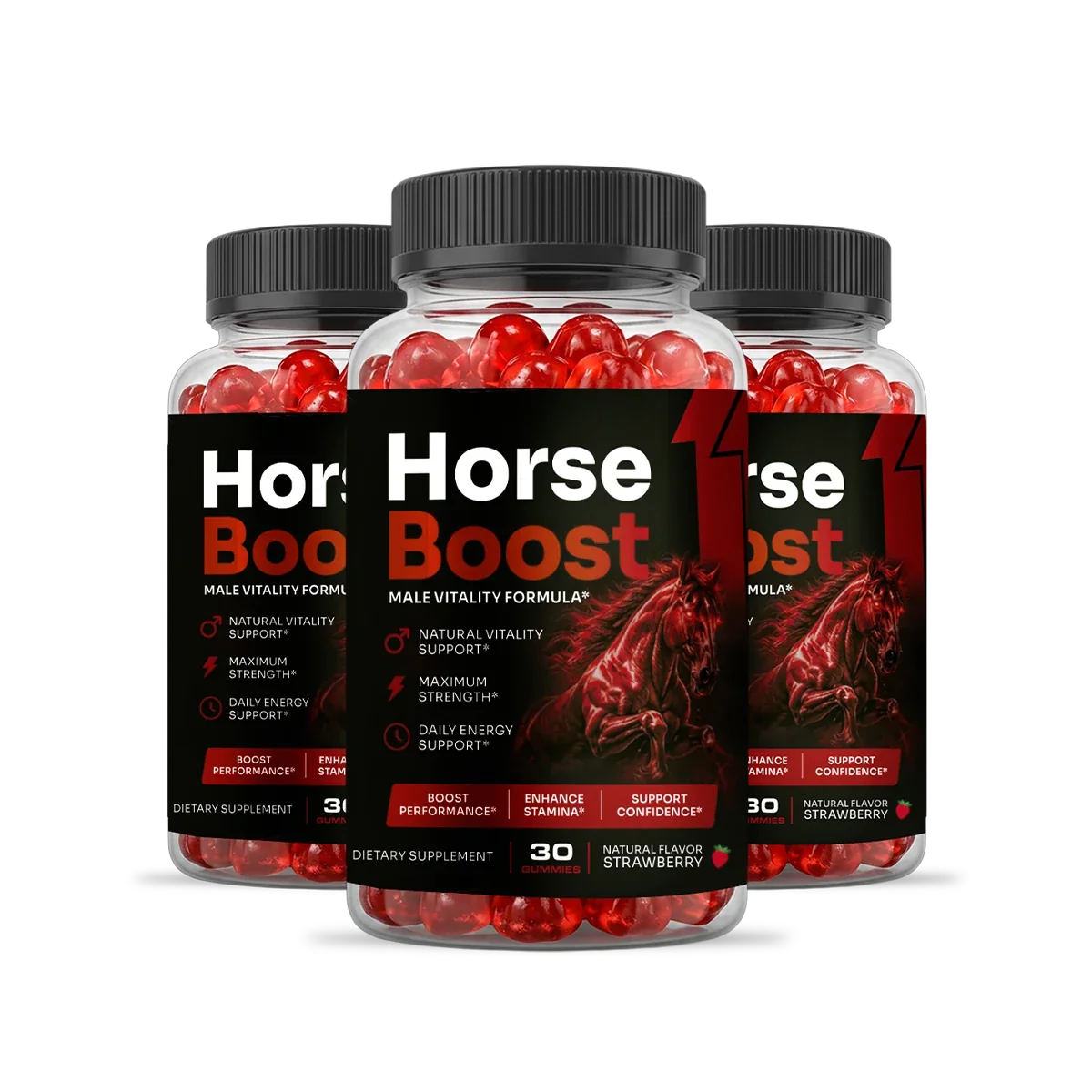
Three bottles of Horse Boost gummies

Ready to try Horse Boost?

Pick a pack and see the price at checkout. The money-back guarantee is 60 days from purchase, unless the sales page prints a longer window. Questions first? Contact the order desk.

Sold through a USA Authorized Horse Boost Retailer. This site is not the manufacturer and earns when you buy.

Horse Boost · one gummy a day30 gummies a bottle

Add To Cart