
From the blog
How to Read a Proprietary Blend
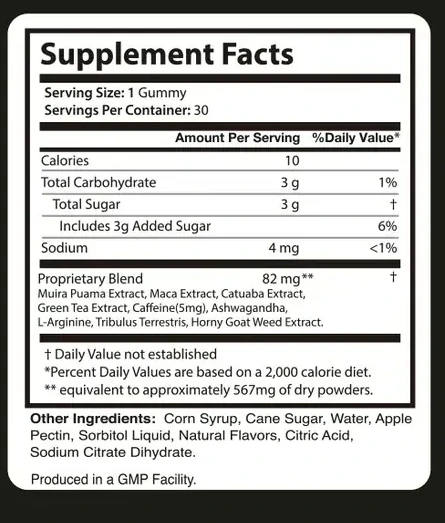
A proprietary blend gives one total weight for several ingredients and no individual amounts. It still tells you two things: the total, which is the ceiling for every ingredient in it, and the order, which runs from heaviest to lightest. If the whole blend weighs less than one ingredient’s studied dose — as with the 82 mg blend in Horse Boost — then every ingredient in it is below its studied dose, whatever the split.
What a proprietary blend actually is
Turn almost any supplement bottle around and you will find one of two kinds of panel. In the first, every ingredient has its own line and its own number. In the second, several ingredients are grouped under a single heading — “Proprietary Blend”, “Performance Matrix”, “Vitality Complex” — with one weight beside the heading and the ingredient names listed underneath in smaller type.
The second kind is a proprietary blend, and it is entirely legal. US labelling rules allow a manufacturer to declare the total weight of a blend rather than the amount of each ingredient in it, provided the ingredients are listed in descending order by weight. The stated reason is trade secrecy: a company that spent money developing a formula does not want a competitor to copy it line by line.
That reason is real, and it is worth taking seriously before treating every blend as a trick. Formulation work costs money. A small company with one good product has a genuine interest in not handing the recipe to a contract manufacturer with a bigger marketing budget.
The problem is what the practice does to the buyer. A supplement is not a soft drink. The whole question of whether it does anything comes down to how much of each ingredient it contains, compared with how much was used in the research that made the ingredient interesting in the first place. Remove the amounts and you remove the only way to answer that question.
The two things a blend still tells you
A blend is not a black box. It leaks information in two specific ways, and both are useful enough to be worth learning.
First, the total is a ceiling. If a blend weighs 500 mg, then no ingredient inside it can weigh more than 500 mg. That sounds trivial. It is not, because it turns an unanswerable question into an answerable one. You cannot ask “how much ashwagandha is in this?” and get an answer. You can ask “could there be 600 mg of ashwagandha in this?” and get a firm no.
Second, the order is descending by weight. The rules require the ingredients inside a blend to be listed heaviest first. So the first name is the largest share and the last name is the smallest, and any ingredient listed after one with a published amount must weigh that amount or less.
| What the label gives you | What you can conclude |
|---|---|
| Blend total | The absolute maximum for any single ingredient in it |
| Descending order | A ranking, first to last |
| An amount printed inside the blend | A hard cut: everything below it in the list weighs that or less |
| Number of ingredients | The average share, if you assume an even split |
| Nothing else | The actual split, which is the thing you wanted |
That third row is the one people miss. Occasionally a manufacturer prints one amount inside a blend — usually caffeine, because a stimulant deserves a number. When that happens, the ingredient’s position in the list divides the blend into two halves: everything above it weighs at least that much, and everything below it weighs at most that much.
Working out the ceiling, step by step
Here is the method, using the product this website is about. It takes about a minute and it needs no assumptions beyond the label itself.
Read the blend total
Horse Boost prints 82 mg. Write it down.
Count the names
Nine. That is the number sharing the total.
Subtract any published amounts
Caffeine is printed at 5 mg, so 77 mg is left for the other eight.
Set the ceiling
The most any single one of those eight can weigh is 77 mg — which would require the other seven to be zero.
Compare with the studied dose
Look up the dose used in research for the ingredient you care about, and put the two numbers side by side.
Use the ordering rule
Anything listed after caffeine weighs 5 mg or less. That is a much tighter ceiling than the first one.
Run that on the ingredient most people would actually want from this list. Ashwagandha has the best evidence of anything on the panel: trials on stress, sleep and exercise generally use 300 to 600 mg a day of root extract. On this label ashwagandha is listed sixth, after caffeine.
So the label’s own ordering rule says ashwagandha here is 5 mg or less. Against a low studied dose of 300 mg, that is a ratio of at least sixty to one. No assumption was needed to get there; it came from the order of the names and one printed number.
- Muira puama extractNo established dose; human research is very thinnot publishedAt most 77 mg, and only if it were the whole blend
- Maca extract1,500–3,000 mg a day in most trialsnot publishedAt most 77 mg, and only if it were the whole blend
- Catuaba extractNo established dose; almost no human researchnot publishedAt most 77 mg, and only if it were the whole blend
- Green tea extract250–500 mg a day of extract in most trialsnot publishedAt most 77 mg, and only if it were the whole blend
- Caffeine100–200 mg is a usual effective dose5 mgAbout 1/20 of a usual 100 mg dose
- Ashwagandha300–600 mg a day of root extract in most trialsnot publishedAt most 77 mg, and only if it were the whole blend
- L-arginine3,000–6,000 mg a day in most trialsnot publishedAt most 77 mg, and only if it were the whole blend
- Tribulus terrestris250–750 mg a day in most trialsnot publishedAt most 77 mg, and only if it were the whole blend
- Horny goat weed extractHundreds of milligrams in the little research there isnot publishedAt most 77 mg, and only if it were the whole blend
Trial ranges are the ones usually quoted for these ingredients. They are not studies of Horse Boost; no study of this product exists. The ceiling column is arithmetic, not a measurement: 82 mg minus the 5 mg of caffeine leaves 77 mg for eight ingredients to share.
When a blend matters and when it does not
It would be lazy to say that every proprietary blend is a reason to walk away. The honest position is that it depends on the total, and on what the product claims.
| Situation | Does the blend matter? | Why |
|---|---|---|
| A 1,500 mg blend of three ingredients | Somewhat | The average share is 500 mg, which is in studied territory for several herbs |
| A 1,200 mg blend of ten ingredients | Yes | The average share is 120 mg, below most studied doses |
| An 82 mg blend of nine ingredients | Decisively | The total is below one studied dose before it is divided |
| A flavour or texture blend | No | Nobody is buying the product for its gelling agent |
| A blend on a product sold for a specific outcome | Yes | The outcome depends on the amounts, and the amounts are what is missing |
The last row is the general principle. A blend is a problem in proportion to how much the product’s promise depends on the numbers inside it. A multivitamin that groups its flavourings is not hiding anything you wanted. A performance product whose entire claim rests on nine botanicals, all inside one small blend, is hiding exactly the thing you came for.
And there is a threshold below which the argument stops being about disclosure at all. If the total is smaller than a single ingredient’s studied dose, the split no longer matters. Every possible division puts every ingredient below its benchmark. At that point the blend is not concealing a strong formula; it is concealing a small one.
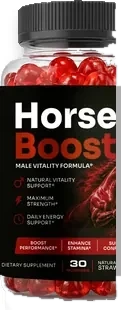
See the whole Horse Boost panel, blend line and all.
Check today’s priceWhat a good label does instead
The alternative is not complicated, and plenty of products manage it.
A well-built label prints an amount beside every active ingredient, and adds a standardisation where one exists: “Ashwagandha root extract, 600 mg, standardised to 5% withanolides”. Two numbers, and the entire question of whether the product matches the research is settled in the time it takes to read them.
Standardisation deserves a word of its own, because it is the part most people skip. An extract is not a fixed thing. Two suppliers can both sell “ashwagandha root extract” and deliver material differing several-fold in withanolide content, which is the part the trials measured. Without a standardisation figure, even a generous milligram number is only half an answer.
What a strong label prints
- An amount beside every active ingredient
- A standardisation percentage where one exists
- Latin names, so the species is unambiguous
- The full other-ingredients line
- A lot code and a best-before date
- A manufacturer, not only a distributor
What a weak label prints
- One blend total for many ingredients
- No standardisation for anything
- Common names only, so the species is unknown
- A blend total smaller than one studied dose
- Marketing images naming fewer ingredients than the panel
- “Maximum strength”, which means nothing
On that scale, Horse Boost lands in an unusual place. It does several of the good things: the other-ingredients line is printed in full, the gelling agent is named, the caffeine is declared with a number, and the origin is described honestly as “made in the USA with globally sourced ingredients”. Then it does the single most consequential bad thing, and the blend total is small enough that no reading rescues it.
Five questions to ask a blend
If you take nothing else from this article, take these. They work on any bottle, in any shop, in under two minutes.
What is the total?
Find the number beside the blend name. Everything else depends on it.
How many names share it?
Divide. The average share is a reasonable first guess at what any one ingredient weighs.
Which name am I here for?
Find it in the list. Its position tells you whether it is near the top of the total or near the bottom.
What dose does the research use?
Search the ingredient plus “dose”. The first lines of almost any trial abstract will tell you.
Is the total smaller than that dose?
If yes, stop. The split is irrelevant and the answer is already no.
The bottom line
A proprietary blend is legal, sometimes defensible, and always a subtraction. It removes the amounts, which are the only numbers that connect a supplement to the research behind its ingredients.
It leaves two things behind: a total, which is a ceiling, and an order, which is a ranking. Used together, those two are often enough to settle the question anyway — not by telling you what the product contains, but by ruling out what it cannot contain.
On the Horse Boost panel, the total is 82 mg and the order puts ashwagandha, L-arginine, tribulus and horny goat weed all below the 5 mg of caffeine. You do not need the split. You have your answer.
Sources
- U.S. Food and Drug Administration. Dietary Supplement Labeling Guide, Chapter IV: Nutrition Labeling. FDA guidance for industry. Checked September 24, 2026.
- National Center for Complementary and Integrative Health. Ashwagandha. NCCIH, current page. Checked September 24, 2026.
- Memorial Sloan Kettering Cancer Center. Arginine (About Herbs). MSK integrative medicine database. Checked September 24, 2026.
- National Center for Complementary and Integrative Health. Maca. NCCIH, current page. Checked September 24, 2026.
- U.S. Food and Drug Administration. Spilling the Beans: How Much Caffeine is Too Much?. FDA consumer update, current revision. Checked September 24, 2026.
- U.S. Food and Drug Administration. Dietary Supplements: What You Need to Know. FDA, current revision. Checked September 24, 2026.
Questions on this topic
More answers on the full FAQ page.
What is a proprietary blend?
One total weight for several ingredients, with no individual amounts. It is legal, and the ingredients inside must still be listed in descending order by weight.
Why do companies use them?
The stated reason is trade secrecy — protecting a formula from being copied. The practical effect is that a buyer cannot compare the product with published research.
Can I work out how much of an ingredient is in a blend?
Not exactly. You can work out a ceiling: no ingredient can weigh more than the blend total, and anything listed after a printed amount weighs that amount or less.
How much ashwagandha is in Horse Boost?
Not published. It is listed after caffeine, so by the label’s own ordering rule it is 5 mg or less. Trials use 300 to 600 mg.
Is a blend always a bad sign?
No. It depends on the total and on what the product promises. A blend whose total is smaller than a single studied dose is the clearest case, because then the split does not matter.
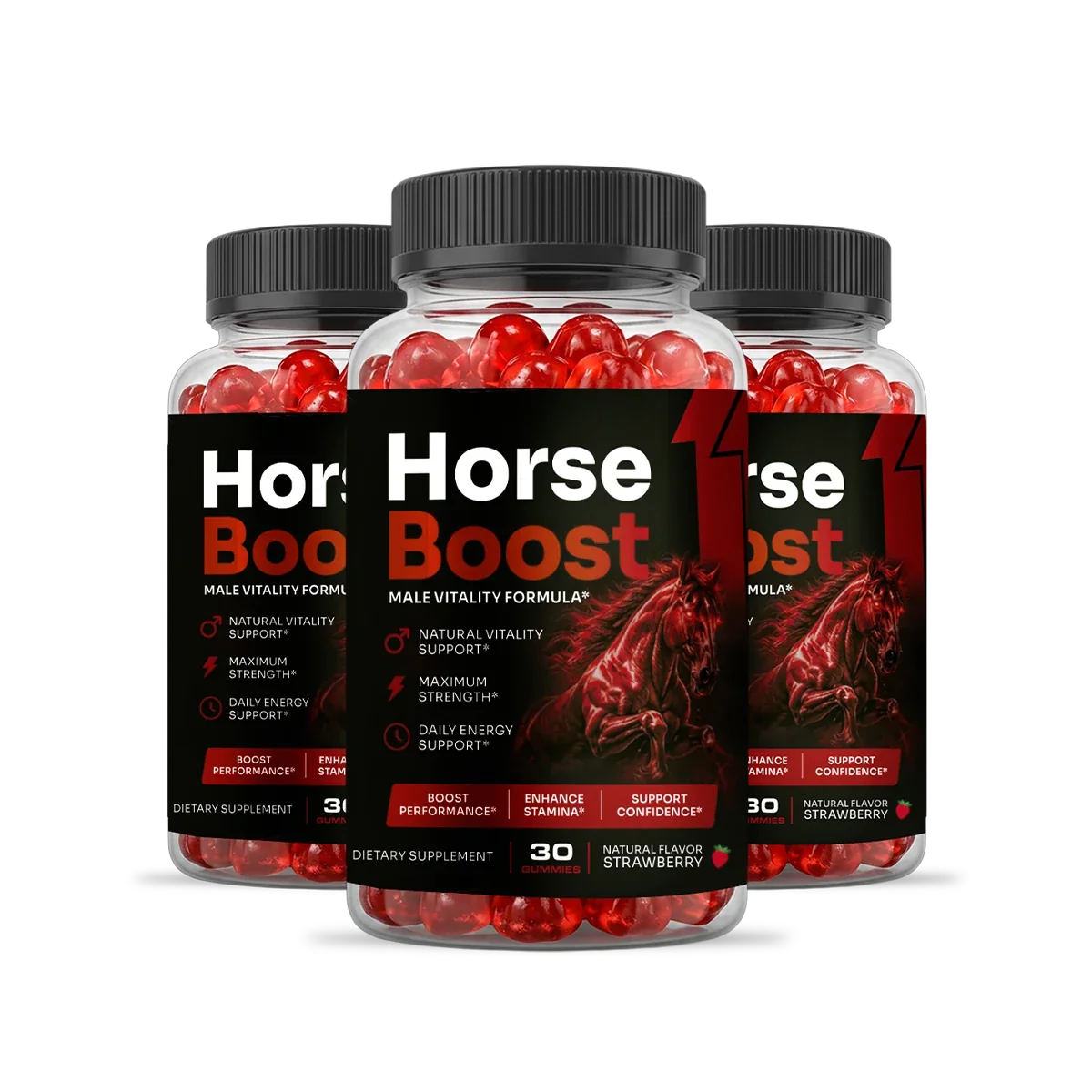
Ready to try Horse Boost?
Pick a pack and see the price at checkout. The money-back guarantee is 60 days from purchase, unless the sales page prints a longer window. Questions first? Contact the order desk.
Sold through a USA Authorized Horse Boost Retailer. This site is not the manufacturer and earns when you buy.Keep reading
Extract ratios and dry powders
What a 10:1 extract ratio means, why “567 mg of dry powders” describes raw material rather…
Read more →Gummies vs capsules
Why gummies hold less active ingredient than capsules, what the sugar adds up to, why they…
Read more →Horse Boost ingredients
All nine names inside the blend, one by one.
Read more →